Day Master · Yin Wood
The Yin Wood Day Master
The short answer
The Yin Wood Day Master is the heavenly stem 乙 in the day pillar of a Saju chart. Its traditional image is the vine. The descriptions below are symbolic interpretations, not a diagnosis or a fixed personality type; the other pillars and seasonal context matter.
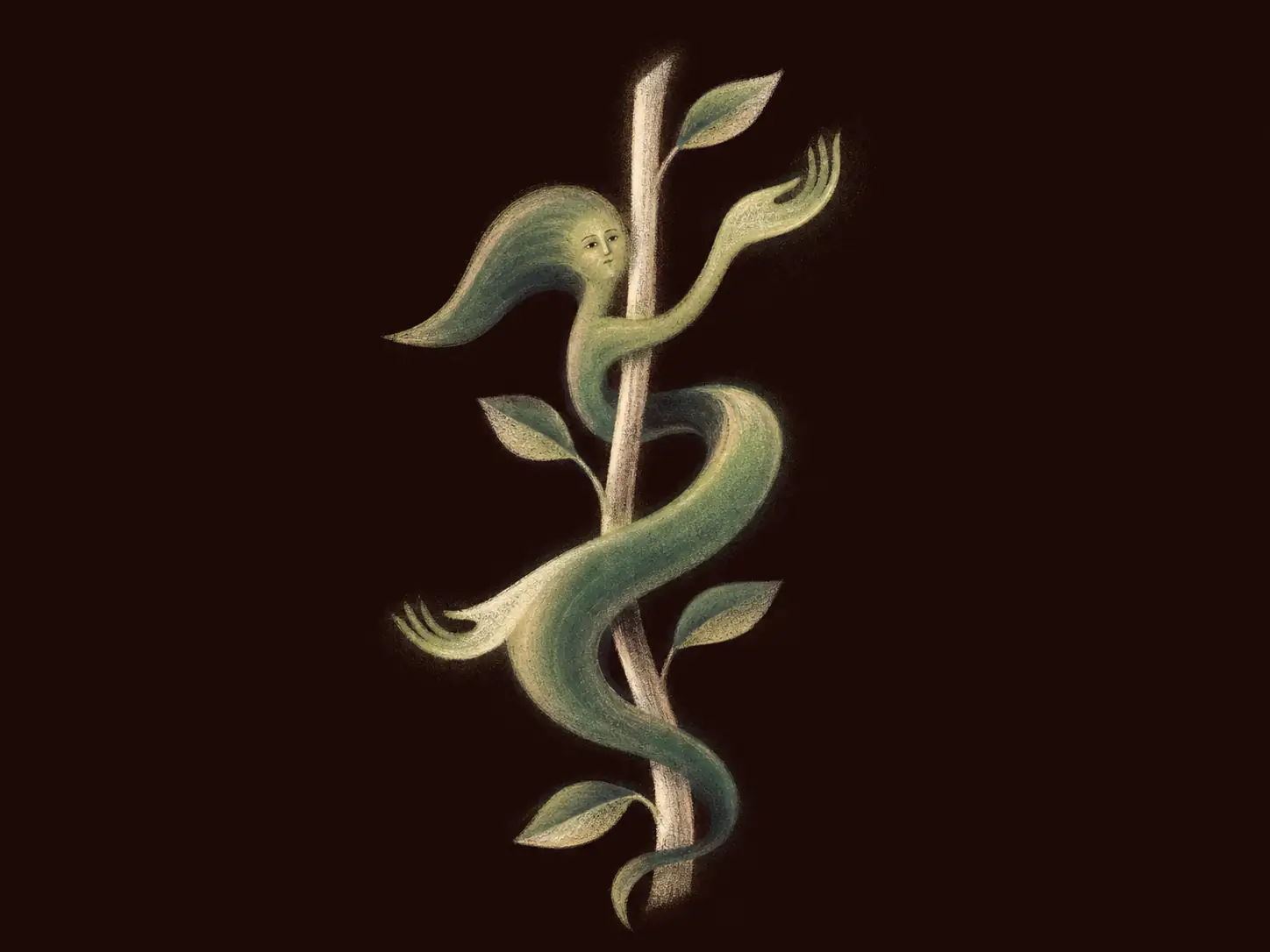
Yin Wood — Eul (을, 乙) in Korean, Yi in Chinese Bazi — is Wood in its flexible form: a vine, a flowering plant, grass that stands back up after the storm that broke the oak. If this is your Day Master, tradition reads you as adaptable, sociable, and far more resilient than you look.
The nature of Yin Wood
Where Yang Wood grows by force of trunk, Yin Wood grows by finding the way through: around the rock, along the trellis, toward whatever light is actually available rather than the light it wishes it had. It is the survivor of the plant world — flexible enough to yield, and quick to recover.
A vine also grows best with support. Eul does famously well alongside strong structures — in classical imagery, wrapping a Gap tree — which is read not as weakness but as intelligence about ecosystems: Yin Wood people instinctively understand that thriving is relational.
Personality and strengths
Yin Wood people are gifted adapters and connectors. They read rooms quickly, adjust their approach without losing their aim, and tend to be genuinely liked — there is a softness to the type that lowers other people’s defenses. Persuasion, diplomacy, and timing are their native tools; they achieve by alignment what Yang Wood achieves by insistence.
Their resilience deserves the emphasis the classics give it: Eul bends through circumstances that break sturdier-looking people, and quietly resumes growing.
Where it struggles
The shadow of flexibility is wavering. Yin Wood can adapt so readily that it loses track of its own direction — agreeing its way into commitments it never wanted, shaping itself to whoever is nearest, depending on structures it has outgrown. Decision fatigue and difficulty with direct confrontation are the recurring themes.
The growth edge is stem-strength: learning that some moments call for standing like a tree rather than bending like grass.
Love and relationships
In love, Eul is attentive, responsive, and charming — the partner who notices moods, remembers details, and keeps the emotional weather pleasant. The risk is over-accommodation: shaping itself around a partner until resentment grows where a self used to be. Yin Wood does best with partners who offer real structure without demanding conformity — a trellis, not a cage.
Career and work
Eul excels where reading people and adjusting course are the actual work: negotiation, sales, diplomacy, design, marketing, counseling, the arts. It flourishes in strong organizations and skilled teams, where its talent for alignment has something worthy to align with. It struggles in isolated roles with no feedback, and under crude, force-first leadership that mistakes its flexibility for availability.
Is this your Day Master?
Remember that a Day Master is the center of a chart, not the whole of it. How strongly these Yin Wood traits show up in you depends on the other seven characters — the elements that feed, drain, and restrain your 乙. Our free calculator computes your exact Day Master and Five Elements balance from your birth date, with historical timezone corrections applied; the full reading interprets what your particular chart does with it.
Common questions
How do I know if I am a Yin Wood Day Master?
Calculate your Saju chart from your birth details and check whether the heavenly stem of the day pillar is 乙. Your birth-year animal or Western zodiac sign cannot determine it.
Does every Yin Wood Day Master have the same personality?
No. The Day Master is one character in a larger chart. Other pillars, seasonal context and your own lived experience make a single-label description incomplete.
Can this Day Master determine my ideal partner or career?
No. The relationship and work sections describe traditional themes to reflect on. They are not a compatibility verdict, career test or substitute for decisions grounded in your circumstances.
These guides explain a traditional symbolic framework. Chart calculations and their interpretations are different things. Interpretations are for cultural exploration and self-reflection, not predictions or medical, financial, legal or psychological advice.